Introduction: The Grocery Store Scenario
It’s happened to the best of us. You are in the checkout line at the grocery store. Your toddler asks for a candy bar. You say “no.”
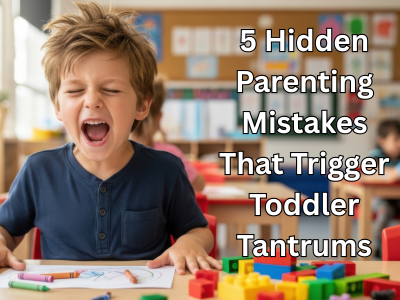
Suddenly, the air changes. The lower lip trembles. The lungs fill with air. And then—chaos.
Screaming. Arching the back. Kicking the floor. Every pair of eyes in the store seems to be burning into you. You feel your own heart rate spike, your face gets hot, and you have two urges: either run away or yell, “STOP IT NOW!”
If this sounds familiar, take a deep breath. You are not a bad parent. Your child is not a “monster.” You are simply stuck in the Tantrum Trap.
In this guide, we are going to explore why tantrums happen and give you practical, psychology-backed strategies to handle them without losing your cool.
Need a complete step-by-step system?
Check out our in-depth review of The Meltdown Miracle to see how you can fix this in 14 days
Step 1: Understand the “Why” (It’s Not Manipulation)
The biggest mistake parents make is thinking their child is doing this to them.
“He is trying to manipulate me.”
“She just wants to embarrass me.”
The science tells us a different story. Toddlers (ages 1-4) have a very undeveloped prefrontal cortex—the part of the brain responsible for impulse control and logic. When they are overwhelmed by disappointment, hunger, or fatigue, their “logical brain” shuts down and their “emotional brain” takes over.
A tantrum is not a strategy; it is a system crash.
Your child is literally drowning in big feelings and doesn’t know how to swim. Once you realize they are struggling, not manipulating, it becomes easier to stay calm.
Step 2: The Art of the “Pause” (Regulate Yourself First)
You cannot calm a storm if you are a hurricane.
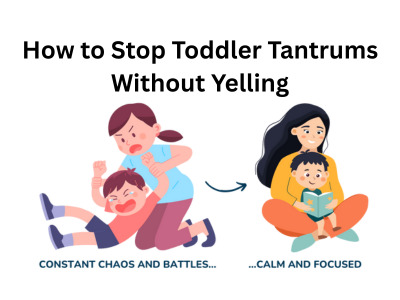
When your child starts screaming, your body goes into “Fight or Flight” mode. You want to yell to regain control. But yelling only adds fuel to the fire.
Try this technique:
Before you say a single word to your child, take a “Parent Pause.”
- Close your eyes (if safe).
- Take a deep breath in for 4 seconds.
- Exhale for 4 seconds.
- Remind yourself: “This is not an emergency. I can handle this.”
By regulating your own nervous system, you become the “anchor” in their storm.
Step 3: Connect Before You Correct
The old school method was to ignore them or send them to their room immediately. While you shouldn’t give in to their demands (e.g., don’t buy the candy), you should acknowledge their feelings.
This is called Validation.
Get down on their eye level and say:
“I can see you are so mad. You really wanted that candy. It’s hard to hear ‘no’, isn’t it?”
This doesn’t mean you change your mind. It just means you are saying, “I hear you.”
Often, a toddler just wants to be understood. Once they feel heard, the intensity of the screaming often drops by 50%.
Step 4: Create a “Calm Down Corner” (Not a Naughty Step)
Time-outs are controversial. Sitting a child on a “naughty step” alone can make them feel abandoned and increase anxiety.
Instead, smart parents are moving towards a “Calm Down Corner.”
This is a designated safe space in your house with soft cushions, maybe a sensory jar (glitter bottle), or a favorite stuffed animal. It is not a punishment. It is a place to reset.
How to use it:
Instead of shouting “Go to timeout!”, you say:
“Whoa, your body has too many big feelings right now. Let’s go to the Calm Corner together and help your body feel better.”
Pro Tip:
Establishing a Calm Down Corner correctly requires a specific method so the child doesn’t see it as a punishment.
We discuss the exact “Calm Down Corner” strategy in detail in our Meltdown Miracle Review here
Step 5: Hold the Boundary (The Hard Part)
This is where many parents stumble. You stayed calm, you validated their feelings… but the screaming continues.
The temptation to just give them the iPad or the cookie is overwhelming.
Do. Not. Give. In.
If you give in during a tantrum, you are teaching your child a powerful lesson: “Screaming works. If I scream long enough, Mom/Dad will crack.”
You must be a “Warm Wall.” You are loving and present (Warm), but your “No” is solid and unmoving (Wall).
“I love you, and the answer is still no. I will stay here with you until you are ready to play.”
Step 6: The “After the Storm” Reconnection
Once the tears stop and the breathing returns to normal, don’t just pretend nothing happened. But also, don’t lecture them immediately.
Hug them. Reconnect.
“That was a big feeling, wasn’t it? I’m proud of you for calming down. Let’s go play blocks.”
Later in the day, when everyone is happy, you can talk about what happened and how to handle it better next time.
Common Mistakes That Make Tantrums Worse
- Over-explaining:
Trying to reason with a screaming toddler using logic (“We can’t buy candy because it has sugar and dinner is in 2 hours…”). They literally cannot hear you. Save the logic for later. - Threatening:
“If you don’t stop, we are never coming to the park again!” Empty threats damage your credibility. - Mocking:
Laughing at their “silly” reason for crying makes them feel small and humiliated.
When “Just Tips” Aren’t Enough…
Reading blog posts is a great start. But if you are dealing with daily meltdowns, bedtime battles, and aggressive behavior (hitting/biting), a few tips might feel like putting a band-aid on a broken arm.
You need a system. You need a consistent plan that you and your partner can follow for 14 days straight to rewire your child’s behavior habits.
I recently reviewed a program called The Meltdown Miracle. It takes all the psychology concepts we discussed here (Validation, Calm Corners, Emotional Regulation) and puts them into a simple, step-by-step daily guide.
It’s designed for parents who need results fast.
Why I recommend it:
- It teaches you exactly how to set up the Calm Down Corner so it actually works.
- It gives you scripts on what to say (word-for-word).
- It’s incredibly affordable (currently around $14).
Read my full review of The Meltdown Miracle here
OR
Get the The Meltdown Miracle Guide directly here
Conclusion: You Can Do This
Parenting is the hardest job in the world. There is no manual given at the hospital. But remember: Tantrums are a phase. They are an opportunity to teach your child emotional skills they will use for the rest of their lives.
By staying calm, validating their feelings, and holding your boundaries, you are raising a resilient human being.
If you feel like you’ve tried everything and nothing is working, don’t lose hope. Sometimes you just need a new toolkit.
Ready to transform your home life?
Check out the resource that has helped over 87,000 parents find peace:
The Meltdown Miracle: The 14-Day Solution
Read Next: Top 5 Parenting Mistakes That Cause More Tantrums